
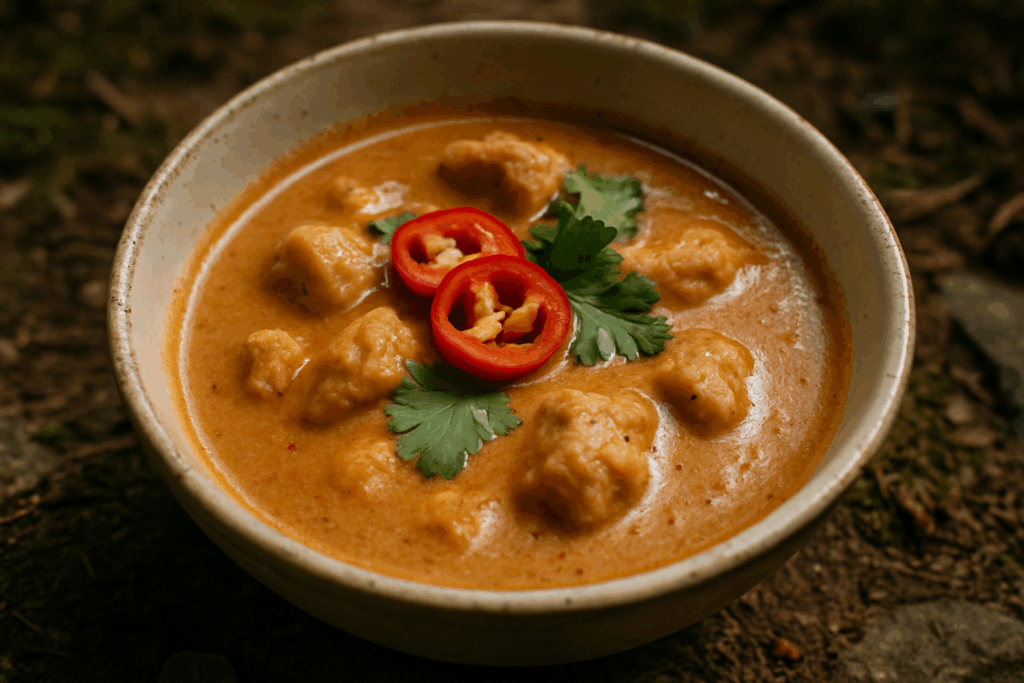
What Makes Thai Curry Stand Out
Think of Thai curry as a flavor balancing act. Spice from chili, sweetness from palm sugar or coconut milk, saltiness from fish sauce, sourness from lime or tamarind, and a hit of savory umami all come together in one pot. When done right, none of those flavors overpower the others. They hit you in sequence, balanced, layered, satisfying.
The foundation is simple but powerful: curry paste (red, yellow, green, or Massaman), full fat coconut milk, kaffir lime leaves, and galangal (a cousin of ginger, sharper and citrusy). Throw in lemongrass, garlic, and Thai basil, and you’re most of the way there. Don’t skip fish sauce unless you have to; it’s the quiet force behind that unmistakable umami.
Region matters. Red curry? Bold and versatile great with meats and thicker veggies. Green curry leans herbal and hotter. Yellow curry is milder, a good match with chicken or root veg. Massaman, from the Muslim south, brings in warming spices like cinnamon and star anise it’s Thai flavor with a whisper of Indian influence.
The ingredients don’t change much across the country, but how they’re used and in what ratio makes all the difference. Start with understanding where the heat, richness, and balance need to land, and adjust from there.
Quick Note on Curry Pastes
If you’ve ever stood in front of the international aisle wondering whether to grab a jar of Thai curry paste or attempt the DIY route, you’re not alone. While nothing quite compares to the depth of a homemade paste, store bought options are more versatile and flavorful than ever.
Store Bought vs. Homemade: What’s Worth Your Time
Homemade Curry Paste
Pros:
Unmatched freshness and complexity
Total control over heat levels and ingredient quality
Cons:
Time consuming (especially sourcing hard to find ingredients like galangal and kaffir lime peel)
Requires a blender or mortar and pestle for best results
Store Bought Curry Paste
Pros:
Incredibly convenient for busy weeknights
Modern brands offer impressive authenticity when chosen wisely
Cons:
Can lack brightness and depth without modifications
Verdict: Save homemade paste for special occasions. For everyday cooking, a solid store bought option enhanced the right way gets you 90% of the flavor with 10% of the effort.
Best Thai Curry Paste Brands (2026 Picks)
Looking for the most authentic and flavorful options on the shelf? Here’s what to reach for in 2026:
Mae Ploy: A strong, punchy paste ideal for traditional red and green curries
Mae Anong: Great balance of spice and aroma, especially good for Massaman
Aroy D: Widely available and consistent; a solid choice for beginners
Namjai: Lesser known, but favored by Thai home cooks for its vivid color and freshness
Pro Tip: Skip the versions that add sugar or preservatives you’re better off sweetening and seasoning to your own taste.
How to Level Up Store Bought Pastes
Even the best packaged curry paste can use a fresh boost. Add the following to your curry base as it sautés to bring it to life:
Grated or finely chopped fresh garlic and ginger
Sliced shallots or onions
Fresh red chili or chili flakes (if you want to dial up the heat)
Lemongrass paste or minced lemongrass stalk
A touch of lime zest or juice for brightness
A quick sauté of these aromatics with a couple of tablespoons of coconut oil before adding your curry paste can transform the flavor from flat to full bodied.
Bottom line: a jar of curry paste can be your shortcut, but let your aromatics do the rest of the heavy lifting for that made from scratch magic.
Pantry Staples that Do the Heavy Lifting
Great Thai curry doesn’t require a pantry full of rare ingredients just the right staples used the right way.
Let’s start with coconut milk. A good can should pour thick, not watery. Check the label: you want at least 60% coconut extract, and ideally no gums or stabilizers. The rich stuff adds body and helps carry the spice and herbs. If yours separates in the can, that’s a good sign it means it hasn’t been overprocessed. Don’t shake it unless you want it evenly blended. For stir frying the curry paste, that thick cream on top is gold.
Fish sauce isn’t just salty it’s funky, deep, and essential. Use it when you want umami and complexity, especially in red or green curry. Soy sauce can work in a pinch, or if you’re going vegetarian, but it lacks that sharp backnote that anchors the flavor. If you sub, go with a high quality light soy and consider adding a touch of miso for extra heft.
Now for sweetness. Traditional Thai curries balance spice with sugar, and palm sugar is the go to. It’s subtle, almost caramel like. Can’t find it? Go for brown sugar over white, and add just a pinch at a time. Avoid honey or maple syrup here they skew the flavor too far off course.
Finally, don’t skip the herbs. Thai basil brings a spicy, anise like lift. Coriander (cilantro) keeps things bright. Kaffir lime leaves? Non negotiable if you want to nail a citrusy top note. Tear them for better aroma don’t chop. Add herbs right before serving so they stay fresh and don’t dull in the heat.
Each of these ingredients pulls more weight than you’d think. Nail them, and the rest is just layering.
Weeknight Hacks to Save You Time

Red and green Thai curries are perfect candidates for the one pot treatment. Start with your curry paste bloomed in a bit of oil. Add coconut milk, your protein of choice (chicken thighs work best if you’re going meaty), toss in chopped veg, and simmer until everything’s tender and coated in flavor. With tofu, add it after your sauce thickens it doesn’t need much time. Shrimp? That goes in at the very end. Overcooking it means rubbery bites.
Yellow curry handles heat a little differently. For this, a sheet pan works wonders. Whisk your curry paste, coconut milk, and a splash of fish sauce into a thick ish marinade. Toss it over chopped potatoes, onions, and whatever protein you’re feeling then let the oven do its thing. Golden edges, deep flavor, and minimal cleanup.
Want to cut cook time even further? Batch prep. Make a double load of your favorite curry paste on the weekend. Freeze it in silicone trays. Keep pre chopped aromatics (like shallots, garlic, and chili) in airtight containers. That coconut milk simmered magic will come together fast when the base is already in your freezer.
Pairing and Serving Like a Local
Jasmine rice is the go to, but it’s not the only grain in town. Sticky rice isn’t just for mango dessert it holds its own with rich red or green curries, especially when you want to eat with your hands or wrap bites in lettuce. Brown rice brings an earthy backdrop and a bit more chew great for people chasing both texture and fiber. Pandan infused rice adds a subtle aroma: it’s soft, a little floral, and turns even basic curry into something that feels restaurant tier.
Rich curries need contrast. You don’t want to overwhelm the palate with just heat and creaminess. Bright, fresh sides like green papaya salad slash through the fat like a blade crunchy, tart, lightly spiced. Lightly pickled cucumbers or carrots add a tang that plays well next to the warmth of curry, resetting your tastebuds for the next bite.
When it comes to plating, you’ve got options. Street style is all about speed and punch: rice in a corner, curry poured and spilling over, maybe a side tucked in. Fast, messy, flavorful. Family style, on the other hand, means small bowls, shared mains, lots of grabbing. It’s slower, more communal. Both are legit. Choose based on mood or how many dishes you feel like washing.
Explore Global Simplicity
Mastering Thai curries is a win, but maybe some nights you’re after bold flavor without reaching for lemongrass or fish sauce. When time’s tight and your taste buds still want to travel, Mediterranean dishes are your fallback ace. Think bright herbs, olive oil rich sauces, and pantry friendly ingredients that come together fast.
If you’re into big flavor with low weekday effort, check out Easy Mediterranean Dishes for Weeknight Cooking. It’s a straight path to solid meals that don’t waste time and they still deliver the kind of depth that makes dinner feel worth it.
Final Takeaways That Make it Worth It
If you learn just three Thai curry types say red, green, and yellow you create a launchpad for endless variation. Each one has its own backbone of ingredients, but they’re more flexible than you think. Swap chicken for tofu. Try shrimp one week, eggplant the next. Once you understand the flavor profiles, freestyle becomes second nature.
The biggest upgrade? Spend a little more on a top tier curry paste. It’s the core of your dish. A single jar can transform a 30 minute meal into something that tastes like it took hours. Boost it if you want fresh lemongrass, chili, or lime leaves but quality paste is your shortcut to depth.
And there’s no need to cook it the same way twice. Thai cooking isn’t rigid. Whether you throw it all in one pot, grill your protein first, or spice it up with pantry swaps, improvisation is the heart of it. Make it bold. Make it yours.

 Cindy Thorntonesion writes the kind of global cuisine guides content that people actually send to each other. Not because it's flashy or controversial, but because it's the sort of thing where you read it and immediately think of three people who need to see it. Cindy has a talent for identifying the questions that a lot of people have but haven't quite figured out how to articulate yet — and then answering them properly.
They covers a lot of ground: Global Cuisine Guides, Local Food Spotlights, Recipe Ideas and Tips, and plenty of adjacent territory that doesn't always get treated with the same seriousness. The consistency across all of it is a certain kind of respect for the reader. Cindy doesn't assume people are stupid, and they doesn't assume they know everything either. They writes for someone who is genuinely trying to figure something out — because that's usually who's actually reading. That assumption shapes everything from how they structures an explanation to how much background they includes before getting to the point.
Beyond the practical stuff, there's something in Cindy's writing that reflects a real investment in the subject — not performed enthusiasm, but the kind of sustained interest that produces insight over time. They has been paying attention to global cuisine guides long enough that they notices things a more casual observer would miss. That depth shows up in the work in ways that are hard to fake.
Cindy Thorntonesion writes the kind of global cuisine guides content that people actually send to each other. Not because it's flashy or controversial, but because it's the sort of thing where you read it and immediately think of three people who need to see it. Cindy has a talent for identifying the questions that a lot of people have but haven't quite figured out how to articulate yet — and then answering them properly.
They covers a lot of ground: Global Cuisine Guides, Local Food Spotlights, Recipe Ideas and Tips, and plenty of adjacent territory that doesn't always get treated with the same seriousness. The consistency across all of it is a certain kind of respect for the reader. Cindy doesn't assume people are stupid, and they doesn't assume they know everything either. They writes for someone who is genuinely trying to figure something out — because that's usually who's actually reading. That assumption shapes everything from how they structures an explanation to how much background they includes before getting to the point.
Beyond the practical stuff, there's something in Cindy's writing that reflects a real investment in the subject — not performed enthusiasm, but the kind of sustained interest that produces insight over time. They has been paying attention to global cuisine guides long enough that they notices things a more casual observer would miss. That depth shows up in the work in ways that are hard to fake.