
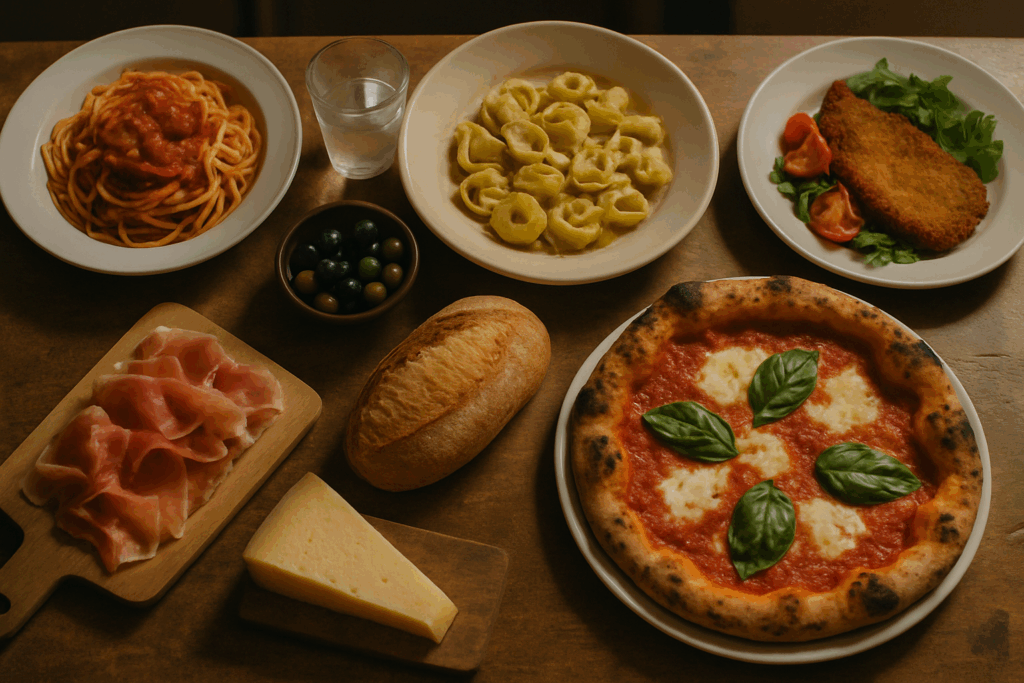
Northern Italy: Rich, Creamy, and Mountain Influenced
Northern Italy is known for its luxurious and hearty cuisine, often shaped by alpine terrain and colder climates. This region leans heavily on rich ingredients like butter, cheese, and rice producing comfort food with refined regional identities.
Lombardy: Golden Comfort in Every Spoon
Signature Dish: Risotto alla Milanese
Key Flavor Notes: Rich, creamy risotto infused with saffron for its golden hue and finished with plenty of grated Parmesan.
Hallmark Ingredients: Arborio rice, saffron threads, beef stock, and butter.
Piedmont: Earthy Elegance and Truffle Richness
Signature Dish: Brasato al Barolo (wine braised beef)
Key Flavor Notes: Elegant and deep, often featuring prized white truffles shaved over pastas or blended into sauces.
Hallmark Ingredients: Barolo wine, truffles (especially white), root vegetables, and herbs.
Emilia Romagna: The Beating Heart of Italian Food Craft
Famous For: Being home to Italian pantry staples like Parmigiano Reggiano, traditional balsamic vinegar, and cured meats.
Must Try Dish: Classic ragù (often served with tagliatelle, not spaghetti)
Hallmark Ingredients: Pork, slow cooked tomato sauces, handmade egg pasta, and regional cheeses.
Regional Pantry Staples
Northern Italian kitchens favor ingredients that enrich flavor and texture:
Butter (often used instead of olive oil)
Arborio and Carnaroli rice varieties for risotto
Porcini mushrooms
A variety of cured meats like speck, prosciutto di Parma, and culatello
From creamy risottos to decadent meat stews, Northern Italy offers a rich culinary experience grounded in tradition and indulgence.
Central Italy: Rustic Soul Food with Earthy Notes
In Central Italy, meals are rooted in simplicity, seasonality, and a connection to the land. The cuisine here leans on time honored traditions and humble ingredients that deliver rich, earthy flavors.
Tuscany: Hearty, Honest, and Herb Infused
Tuscany’s food philosophy is all about turning basic ingredients into deep flavored staples.
Ribollita: A thick, comforting vegetable and bread soup that gets better over time
Pappa al Pomodoro: A rustic tomato and bread dish, rich with garlic, olive oil, and basil
Bistecca alla Fiorentina: A legendary Florentine T bone steak, grilled simply and served rare
These dishes reflect the region’s rural roots, where nothing is wasted and everything is slow cooked to perfection.
Umbria: Slow Food with Truffle Appeal
Often overshadowed by its neighbors, Umbria delivers bold flavor through understatement.
Black Truffles: Used throughout the region, especially shaved over pasta and eggs
Lentils: Particularly prized in Castelluccio, often stewed with herbs and olive oil
Grilled Meats: Simple preparations highlight the natural flavor of pork, lamb, and game
Umbria is Italy’s green heart, with meals shaped by the forests and fertile hillsides.
Lazio: Rome’s Legendary Classics
The cuisine of Lazio especially Rome is indulgent, iconic, and designed to satisfy.
Cacio e Pepe: A minimalist pasta with only Pecorino Romano and black pepper
Amatriciana: Tomato sauce punched up with guanciale and Pecorino cheese
Carbonara: A creamy yet egg based pasta made rich from pork cheeks and cheese
These iconic dishes share a few traits: sharp cheese, robust pasta shapes, and no nonsense flavors.
Flavor Profile of Central Italy
Across Tuscany, Umbria, and Lazio, expect:
Herbs like rosemary and sage used generously
Olive oil taking center stage over butter
Wheat based pastas and breads acting as edible canvases for earthy, intense sauces
This is the heartland of Italian comfort food honest, grounded, and unforgettable.
Southern Italy: Bold Flavors and Coastal Influence

Southern Italy doesn’t hold back. The food here is brash, sun soaked, and full of contrast sweet meets sour, spice meets citrus, lean meets luscious.
Start with Campania, home to Naples and the birthplace of pizza as we know it. The classic Neapolitan pie, blistered in a wood fired oven, is a simple stunner: tomatoes, mozzarella (the buffalo kind speaks for itself), and basil. Add dishes like eggplant parmigiana layered with love, and you get a taste of straightforward brilliance.
In Calabria, the food turns up the heat. Spicy ‘nduja a soft, spreadable salami sneaks into everything from pasta to bruschetta. Locals lean into preserving; vegetables are pickled or packed in oil, ready to punch up any dish. Chili shows up in generous amounts, defining a region that doesn’t dilute its flavors.
Sicily, the southern edge and blend of cultures, goes off script in the best way. Arab influence shows in fragrant couscous with seafood, while caponata brings a sweet sour punch via eggplant, vinegar, and raisins. Then there’s dessert: cannoli filled with sweet ricotta and candied peel, often followed by fresh citrus that actually tastes like sunshine.
Across southern tables, seafood reigns, olive oil is poured freely, and the ingredients do the heavy lifting. Simple, sharp, and honest this is food with no filters.
Islands and Hidden Gems
Sardinia doesn’t do flashy. Its food is rooted in shepherd culture, rugged terrain, and long held tradition. Start with pane carasau ultra thin, crisp flatbread that’s been baked for centuries. Locals still serve it with olive oil, salt, or layered into rustic lasagna like dishes. For something more primal, try porceddu whole suckling pig, spit roasted over wood for hours until the skin snaps like glass. Pair that with tangy sheep’s milk cheeses and you get food that’s both simple and unapologetically rich.
Further south and east, regions like Molise, Basilicata, and Abruzzo keep under the radar, but they’ve got quiet culinary power. In Molise, look for fusilli dressed in lamb ragù. Basilicata’s standout is peperoni cruschi sun dried, flash fried peppers with a sweet crunch that gets addictive fast. Abruzzo leans wild, with dishes like arrosticini (grilled mutton skewers) and saffron laced risottos from the L’Aquila highlands.
These areas aren’t chasing food trends. They’re preserving techniques shaped more by terrain than marketing. It’s food written by stone, wind, and time.
Want to Try Them at Home?
Bring Italy to your table with a handpicked selection of traditional recipes from every region. These recipes are ideal for home cooks looking to explore authentic Italian cuisine without leaving their kitchen.
What You’ll Find:
Northern classics like Risotto alla Milanese or rich ragù from Emilia Romagna
Tuscany’s hearty staples such as pappa al pomodoro and ribollita
Southern icons including Naples style pizza and Sicilian caponata
Island specialties like Sardinian pane carasau and roasted meats
Why Try These Recipes?
Made with accessible ingredients
Tested for flavor and ease
Great insight into regional techniques and traditions
Craving a taste of Italy tonight?
Explore the full list here: Classic Recipe Picks.
For more cooking inspiration and cultural context, check out the extended guide: More on These Classic Recipe Picks
Final Word: One Country, Infinite Plates
Italy isn’t a single cuisine it’s dozens. What you eat in Palermo won’t taste anything like what you get in Bologna, and that’s the point. Geography, history, and even dialects shift from region to region. So does the food. The rugged mountains of the north bring rich dairy and warm stews. Central Italy leans rustic and hearty, heavy on legumes and grilled meats. Down south, it’s all sun, sea, and spice with no apologies for bold flavor.
These aren’t tourist ready trends they’re family traditions, passed down through Sunday lunches and nonna’s handwritten notes. The deeper you go into Italy’s regions, the more the stereotypes melt away. It’s not just pasta and pizza. It’s wild boar ragù, lemon stuffed sardines, saffron risotto, and truffled cheeses all driven by place, season, and memory. That regional pride is what makes Italian food endlessly compelling. The plate changes, but the passion doesn’t.

 Cindy Thorntonesion writes the kind of global cuisine guides content that people actually send to each other. Not because it's flashy or controversial, but because it's the sort of thing where you read it and immediately think of three people who need to see it. Cindy has a talent for identifying the questions that a lot of people have but haven't quite figured out how to articulate yet — and then answering them properly.
They covers a lot of ground: Global Cuisine Guides, Local Food Spotlights, Recipe Ideas and Tips, and plenty of adjacent territory that doesn't always get treated with the same seriousness. The consistency across all of it is a certain kind of respect for the reader. Cindy doesn't assume people are stupid, and they doesn't assume they know everything either. They writes for someone who is genuinely trying to figure something out — because that's usually who's actually reading. That assumption shapes everything from how they structures an explanation to how much background they includes before getting to the point.
Beyond the practical stuff, there's something in Cindy's writing that reflects a real investment in the subject — not performed enthusiasm, but the kind of sustained interest that produces insight over time. They has been paying attention to global cuisine guides long enough that they notices things a more casual observer would miss. That depth shows up in the work in ways that are hard to fake.
Cindy Thorntonesion writes the kind of global cuisine guides content that people actually send to each other. Not because it's flashy or controversial, but because it's the sort of thing where you read it and immediately think of three people who need to see it. Cindy has a talent for identifying the questions that a lot of people have but haven't quite figured out how to articulate yet — and then answering them properly.
They covers a lot of ground: Global Cuisine Guides, Local Food Spotlights, Recipe Ideas and Tips, and plenty of adjacent territory that doesn't always get treated with the same seriousness. The consistency across all of it is a certain kind of respect for the reader. Cindy doesn't assume people are stupid, and they doesn't assume they know everything either. They writes for someone who is genuinely trying to figure something out — because that's usually who's actually reading. That assumption shapes everything from how they structures an explanation to how much background they includes before getting to the point.
Beyond the practical stuff, there's something in Cindy's writing that reflects a real investment in the subject — not performed enthusiasm, but the kind of sustained interest that produces insight over time. They has been paying attention to global cuisine guides long enough that they notices things a more casual observer would miss. That depth shows up in the work in ways that are hard to fake.